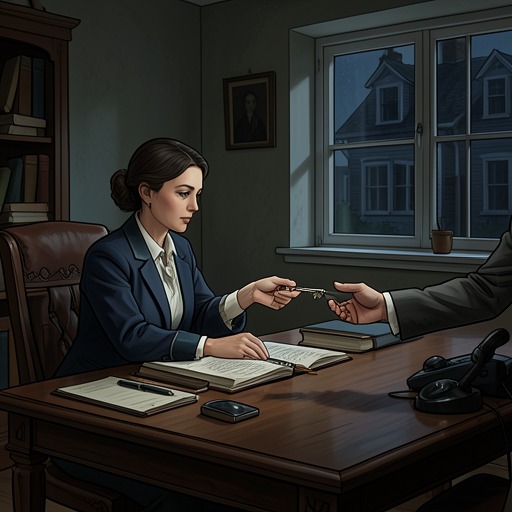
Tony Smith remains discovery
The Whisper ManTony Smith remains discovery is the decisive recovery of the child whose disappearance had remained unresolved for twenty years. It does more than locate a body: it restores Tony Smith to the case as a named child, supplies physical evidence of the hidden criminal network surrounding Frank Carter, and gives shape to the difference between arresting a killer and bringing a missing child home.
Background and Long Delay
Tony Smith disappeared when he was a child, leaving his parents, Miranda Smith and Alan Smith, trapped in an absence that never acquired the finality of confirmed death. They had been seen exhausted in a police reception while their son was missing, and twenty years later he still had not been found. Frank Carter had admitted killing Tony Smith after his arrest, but he refused to say where he had discarded the remains. His van contained forensic evidence that Tony Smith had been held in it, yet the absence of a body left the crime suspended between confession and confirmation.
The delay shaped the emotional meaning of the discovery. Pete Willis had spent years searching hedgerows and woodlands many miles from Featherbank, imagining that the answer might lie somewhere remote. When older remains eventually surfaced close to home, the revelation was not simple relief. It forced him to confront the possibility that the search had been directed away from the truth for two decades, while Tony Smith had been concealed far nearer to the community that had been looking for him.
Discovery in the Garage
The remains were found beneath the garage floor of a house on Garholt Street. A large section of the floor consisted of unevenly arranged house bricks, covering an old mechanic’s pit that had been filled in to create a flat surface. When one brick was lifted, the opening revealed the top of a cardboard box beneath it. More bricks were removed until the box could be drawn out; it was the same size as other boxes in the garage and had been sealed with parcel tape.
The box was opened with a sharp key. Inside were bones and a small skull. A brightly colored butterfly rested among them, its wings moving gently. The butterfly’s presence provides the discovery with an unsettling visual contrast: a living, delicate movement beside the material remains of a child whose life had been reduced to bones. The scene turns a concealed object into a direct encounter with death, while the skull makes the missing child’s physical presence impossible to evade.
Pete Willis reported the development from the house on Garholt Street as a second body. The second discovery was much older than the first and appeared to have been hidden for a long time. That distinction linked the scene to the older crimes rather than treating it as an isolated contemporary killing.
Forensic Identification and Physical Evidence
The forensic examination established that the remains belonged to a male child who had been around six years old at the time of death. A full postmortem had not yet taken place, so the cause of death could not be determined and might never be known. The remains had nevertheless been deceased for a period that could plausibly reach twenty years, matching the chronology of Tony Smith’s disappearance.
The bones had been laid out in the shape of a small child, although time had separated many of them and no flesh remained. The forensic presentation emphasizes both distance and recognition. A skeleton can appear less immediately human than a recent corpse, yet the fact of death remains unmistakable: after enough time, a person is represented by bones and by the possessions left with them.
The box itself preserved additional evidence. Clothes had been stored underneath the bones and were recovered in a carefully extracted, intact pile. Pete recognized blue jogging pants and a little black polo shirt. At another related scene, investigators had noted a blue tracksuit and a Minecraft T-shirt pulled over the face of a boy’s body, with little or no blood at the location and not enough for the injuries, indicating that the child had been killed elsewhere. That contrast helped investigators distinguish the new offender’s method from Frank Carter’s established pattern, but the older clothing recovered from the box provided the material connection to Tony Smith.
Link to Norman Collins and the Carter Network
The discovery implicated Norman Collins, who had been obsessed with Frank Carter and his crimes. Collins had visited a friend of Carter’s in prison and had been stalking the house where the second body was found. Pete Willis became convinced that Collins had known the body was there. The official identification was still pending, but the accumulated circumstances made him certain that the remains belonged to Tony Smith.
Collins later described what happened after he went to the house on Garholt Street. He paid Julian Simpson additional money and was made to wait in a downstairs room. Simpson eventually returned with a sealed cardboard box, opened it carefully, and showed him the remains. When asked to identify them for the record, Collins named Tony Smith. His account transformed the discovery from a hidden burial into evidence of a chain in which the remains had been retained, transferred, and viewed by people connected to the wider exploitation of Carter’s crimes.
The investigation also tied Collins to a more recent murder. Amanda Beck told him that his fingerprints had been found on the hammer used to murder Dominic Barnett. Collins responded with no comment, while the discovery of Tony Smith’s remains supplied a separate, older strand of evidence against him. The case therefore widened from locating a long-missing child to exposing the people who had known about, handled, or profited from the hidden remains.
Consequences and Significance
For Pete Willis, Tony Smith’s recovery should have brought relief and closure, because he had searched for the boy for so long. Instead, it carried grief, self-reproach, and the shock of proximity. Tony had not been found in the distant landscapes Pete had repeatedly searched; he had been concealed near Featherbank, within the ordinary world that had continued around the disappearance.
The discovery also changes the meaning of justice. Frank Carter had already been arrested and had admitted killing Tony Smith, but punishment had not returned the child to his family or answered the question of where he had been left. The recovered bones, clothing, and eventual naming of Tony Smith provide a different kind of resolution: the missing child can finally be treated as a person whose remains deserve protection rather than as an unsolved absence or an object in someone else’s collection.
That ethical shift is reflected in the forensic handling of the remains. Dale described them as being under his protection, with the indignities inflicted on them now over. The bones were no longer hidden in a sealed box beneath a garage floor or circulated through the criminal network. They had entered a process of care, examination, and identification. The discovery therefore closes one form of concealment while opening the possibility—however incomplete—of dignity, truth, and a return home for Tony Smith.